Deerproof Your Hydrangeas: Ways To Keep These Beautiful Plants Safe
DeerProof Your Hydrangeas: Ways to Keep These Beautiful Plants Safe
Hydrangeas are beautiful flowering shrubs that can add a touch of elegance to any garden. However, they can also be a target for deer, which are fond of their leaves and flowers. If you have deer in your area, you may need to take steps to deerproof your hydrangeas in order to keep them safe.
There are a number of ways to deerproof hydrangeas. Some of the most common methods include:
- Physical barriers. This is the most effective way to deerproof hydrangeas. You can use a variety of physical barriers, such as:
- Deer netting
- Chicken wire
- Fencing
- Tree guards
- Repellents. There are a number of commercial deer repellents available. These repellents can be sprayed on the leaves of the hydrangeas, or they can be placed in the soil around the plant.
- Planting deer-resistant hydrangeas. There are a few varieties of hydrangeas that are less appealing to deer. These varieties include:
- Smooth hydrangea (Hydrangea arborescens)
- Panicle hydrangea (Hydrangea paniculata)
- Mountain hydrangea (Hydrangea serrata)
If you are using a physical barrier, make sure that it is tall enough to keep deer out. Deer can jump quite high, so you may need to use a barrier that is at least 8 feet tall. You should also anchor the barrier securely in the ground so that deer cannot push it over.
If you are using a repellent, make sure to reapply it regularly, especially after it rains. You may also need to use a combination of repellents and physical barriers to get the best results.
If you are planting deer-resistant hydrangeas, be sure to choose varieties that are suitable for your climate. You should also plant them in a location where they will receive full sun or partial shade.
By following these tips, you can help to keep your hydrangeas safe from deer and enjoy their beauty for many years to come.
Here are some additional tips for deerproofing your hydrangeas:
- Plant hydrangeas in groups. Deer are less likely to target a large group of plants than a single plant.
- Place hydrangeas near other plants that deer do not like. Deer are often repelled by the smell of certain plants, such as garlic, onions, and lavender.
- Water your hydrangeas regularly. Deer are more likely to eat plants that are stressed or unhealthy.
- Inspect your hydrangeas regularly for signs of deer damage. If you see any damage, take steps to repair it immediately.
By following these tips, you can help to keep your hydrangeas safe from deer and enjoy their beauty for many years to come.
Do you love hydrangeas, but worry that deer will eat them? You're not alone! Deer are known to love the taste of hydrangeas, and can quickly decimate a plant. If you live in an area with deer, it's important to take steps to protect your hydrangeas.
One way to do this is to plant deer-resistant hydrangeas. There are a few varieties that deer don't seem to like as much, such as oakleaf hydrangeas (Hydrangea quercifolia) and smooth hydrangeas (Hydrangea arborescens). You can also try planting your hydrangeas in a location that deer are less likely to visit, such as near a busy road or in a well-lit area.
If you've already planted hydrangeas in an area that deer frequent, you may need to take more drastic measures to protect them. One option is to install a deer fence around your hydrangeas. This can be a bit expensive, but it's an effective way to keep deer out. You can also try using deer repellent, which can be sprayed on your hydrangeas or applied as a barrier around them.
If you're looking for more information about how to protect your hydrangeas from deer, I recommend visiting . This website has a wealth of information on the topic, including articles, videos, and even a forum where you can ask questions and get advice from other gardeners.
FAQ of deer eat hydrangeas
- Q: Why do deer eat hydrangeas?
A: Deer eat hydrangeas because they are a good source of food. Hydrangeas are high in carbohydrates and protein, which are essential nutrients for deer. They also contain minerals such as calcium and phosphorus, which are important for deer's bones and antlers.
- Q: What can I do to prevent deer from eating my hydrangeas?
A: There are a number of things you can do to prevent deer from eating your hydrangeas. Some of these methods include:
* Fencing: You can install a fence around your hydrangeas that is at least 8 feet tall. Deer are good jumpers, so the fence needs to be high enough to keep them out.
* Repellents: There are a number of commercial deer repellents available. These repellents can be sprayed on the hydrangeas or placed around the base of the plant.
* Covering the plants: You can cover your hydrangeas with a burlap sack or other type of mesh. This will make the plants less appealing to deer.
* Planting deer-resistant hydrangeas: There are a number of hydrangea varieties that are less appealing to deer. These varieties include Annabelle, Endless Summer, and Limelight.
- Q: What should I do if deer have already eaten my hydrangeas?
A: If deer have already eaten your hydrangeas, there are a few things you can do. First, you can trim away any damaged leaves and stems. Then, you can fertilize the plant to help it recover. In most cases, hydrangeas will be able to recover from deer damage and continue to bloom.
- Q: What time of year do deer eat hydrangeas?
A: Deer are most likely to eat hydrangeas during the spring and summer months. This is when hydrangeas are in their prime and are most tender. However, deer may also eat hydrangeas in the fall and winter if other food sources are scarce.
Image of deer eat hydrangeas
5 different images of "deer eat hydrangeas" from Pinterest:
- A deer nibbling on the leaves of a hydrangea bush.

- A deer standing in a garden, its head lowered to eat the flowers of a hydrangea bush.
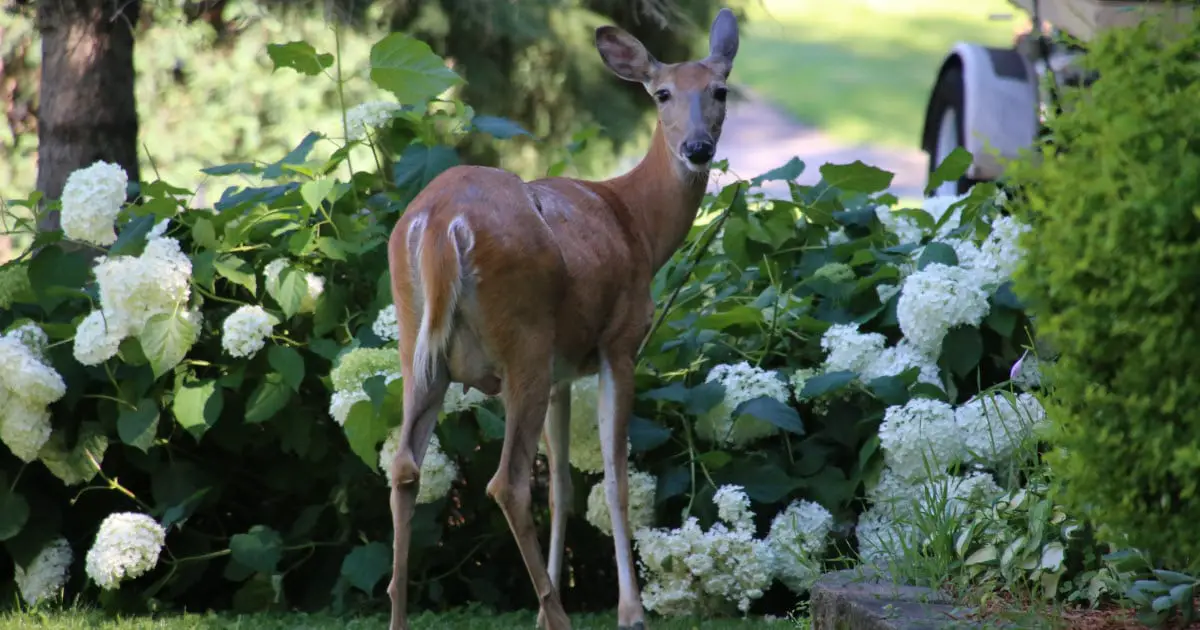
- A deer completely devouring a hydrangea bush, leaving only the bare branches behind.
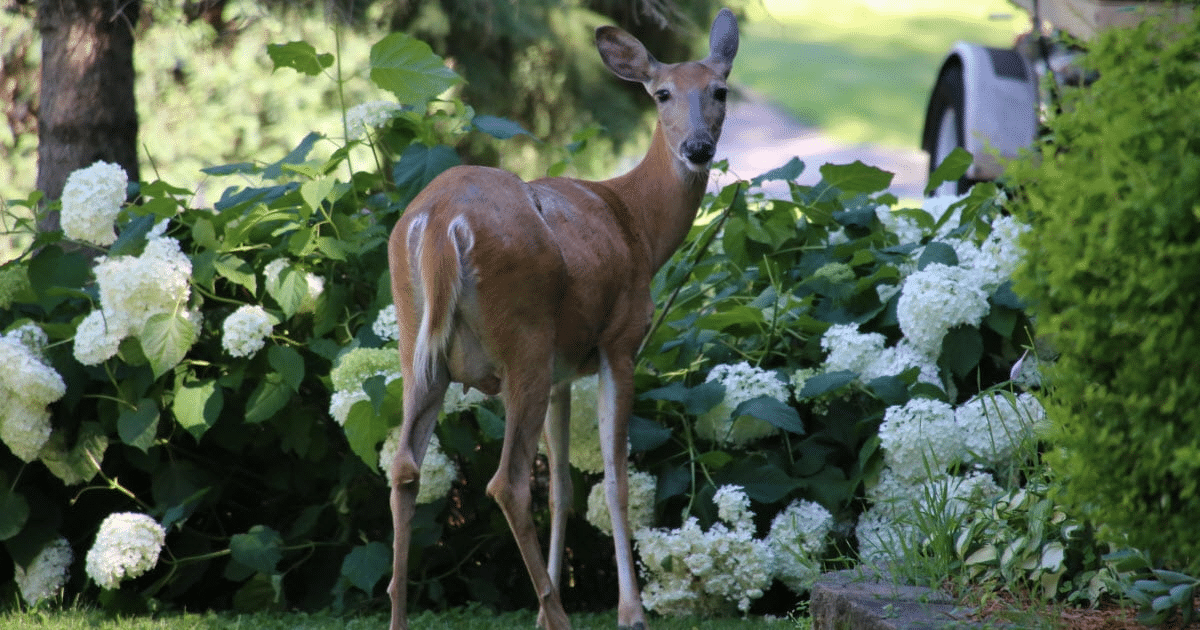
- A group of deer eating the leaves and flowers of several hydrangea bushes in a row.
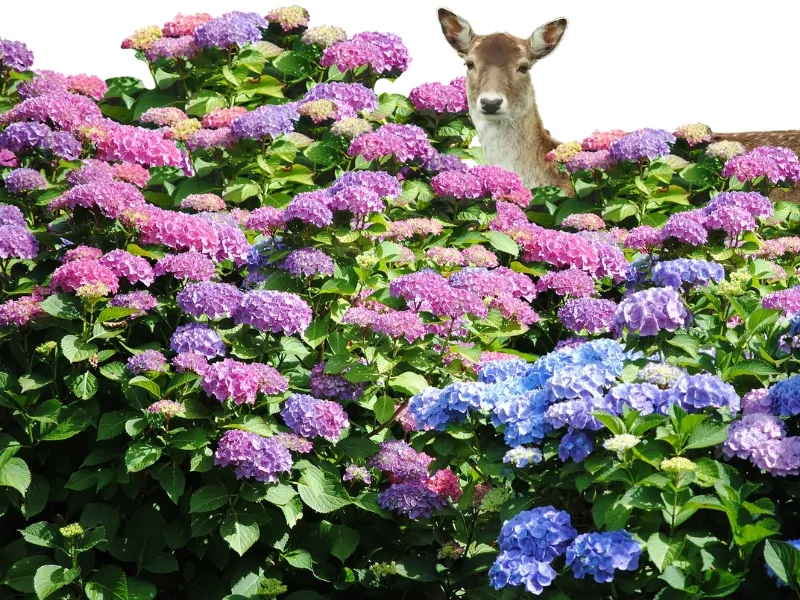
- A close-up of a deer's mouth, with its teeth marks clearly visible on a hydrangea leaf.
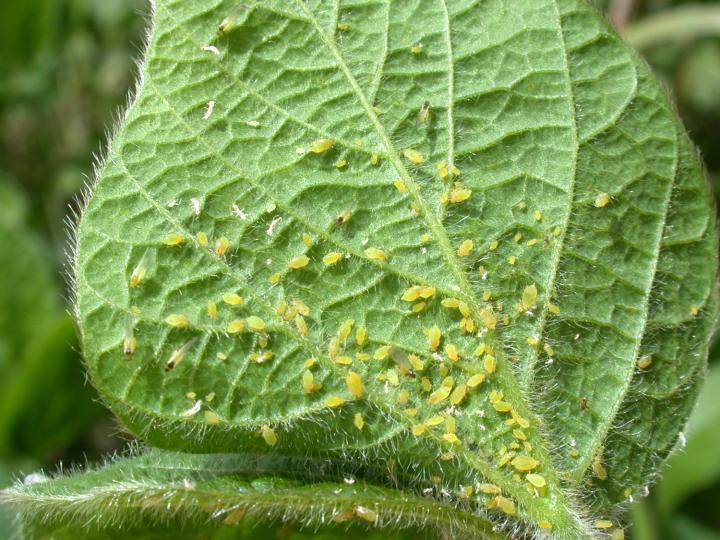

Post a Comment for "Deerproof Your Hydrangeas: Ways To Keep These Beautiful Plants Safe"